Your Website Gets Visitors. Why Isn’t It Getting Enquiries?
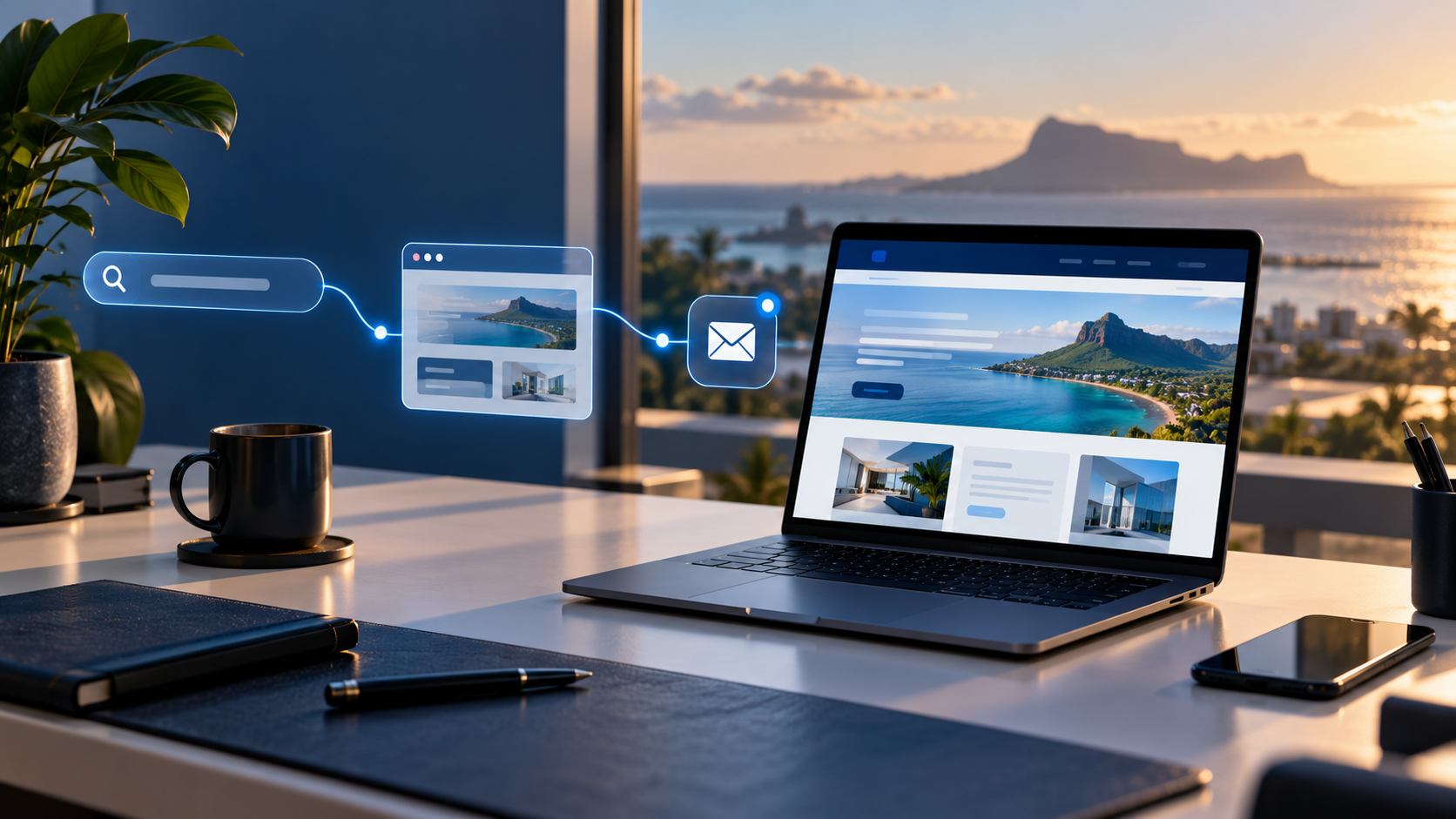
A business owner opens their website analytics and sees visitors arriving. Google Ads is running. Social media posts link to the site. Yet the phone is quiet and the enquiry form rarely gets used.
It is tempting to conclude that the business needs more traffic. Sometimes it does. But first, find out what happens to the visitors you already have.
A website has a job: help the right person understand your offer, trust your business and take the next step. Here is how to find the gaps.
1. Can a visitor tell what you do within seconds?
Many homepages lead with a clever slogan that could describe almost any company. A prospective customer should quickly see:
- What you offer
- Who you serve
- Where you work
- What they should do next
For example, “Innovative digital solutions for your future” asks the reader to figure out the service. “Website design and development for businesses in Mauritius” makes it clear.
This matters even more when someone lands directly on a service page from a search for web design Mauritius or SEO Mauritius. That page should answer their specific question immediately.
Quick test: Show your homepage to someone unfamiliar with your company for five seconds. Hide it, then ask what you sell and how to contact you. If they cannot answer, your message needs work.
2. Are you sending every visitor to the same page?
Someone looking for an online store has different questions from someone seeking a corporate website. A person searching for SEO services may already have a website and want to know why it is not producing leads.
Build useful pages around those distinct needs. A Mauritius web agency might have separate pages for website development, e-commerce, SEO, maintenance and paid advertising. Each page should explain the deliverables, process, suitable projects and next step in plain language.
This also gives search engines a clearer understanding of each page. Google’s guidance emphasises helpful content created for an intended audience.
A page does not become useful merely by repeating “website development Mauritius” twenty times. It becomes useful when it answers the questions behind that search.
3. Have you shown evidence that reduces doubt?
Before contacting an agency, a buyer is weighing risk. Will the work be finished? Will the website be easy to update? Will support continue after launch? Has the agency handled something similar?
Replace broad claims with relevant proof. Show the client’s challenge, what your team built and the outcome you can verify. Screenshots, a live project link, a client quotation and a clear description of your role are more helpful than a grid of unexplained logos.
At Meta-Labs, projects across e-commerce, professional services, associations and institutional organisations deserve individual case studies. A prospective client can then see the type of problem the team has actually solved.
Only publish figures you can substantiate. “More enquiries” is weak if you cannot show how they were measured; a specific result with a timeframe and source is stronger.
4. Is contacting you easy on a phone?
A visitor should not have to hunt for a phone number, open a long form or guess what happens after clicking “Get Started.”
Check your website on a real mobile device:
- Is the main call to action visible without searching through the menu?
- Does the WhatsApp link open the correct conversation?
- Does the form ask only for information needed for the first discussion?
- Does the visitor receive clear confirmation after submitting?
- Can they find your Mauritius contact details and service area?
For complex work, the first conversion can simply be a discussion. The form does not need to collect an entire project specification.
5. Are your ads and landing pages telling the same story?
Suppose your Google ad promises an e-commerce website with local payment integration, but sends the visitor to a general homepage about branding, social media and apps. The visitor must search again for the answer they expected.
Send paid traffic to a page that matches the offer and intent in the ad. Explain what is included, show relevant work and make the enquiry action clear. The same principle applies to Meta ads: the page should continue the promise made in the creative.
Then measure meaningful actions. A click on an ad is not an enquiry, and an enquiry is not necessarily a qualified opportunity. Google Ads conversion measurement can help identify which campaigns produce contacts.
6. Can search engines and AI search understand your business?
Good design and good search visibility work together. Each important service should have a clear page title, descriptive headings, accessible content and internal links that help visitors move between related topics. Your site should also make your business identity and location easy to verify.
If you are considering GEO, or visibility in AI-generated answers, start with the same foundations: useful, specific content and a site search engines can access. Google says its established SEO practices remain relevant to its AI search features.
No agency can promise that a particular page will be cited by an AI tool. You can, however, make your expertise easier to understand by publishing original explanations and well-documented work.
A practical 30-minute website audit
Open your top three pages by traffic and ask:
| Check | What to look for |
|---|---|
| Message | Is the service and intended customer clear immediately? |
| Trust | Is there relevant, verifiable project evidence? |
| Next step | Is one primary action easy to find and complete on mobile? |
| Search intent | Does the page answer the question that brought the visitor there? |
| Measurement | Can you distinguish visits, enquiries and qualified leads? |
Fix the clearest obstacle first, then compare enquiries over a meaningful period. Changing every page and campaign at once makes it harder to learn what worked.
Build a website that earns its place in your business
A successful website brings together design, development, SEO and a clear path to contact. Ads and social media can bring people to the door; the website must give them a reason to walk in.
If your site is attracting visitors but few useful enquiries, contact Meta-Labs for a review of the pages and contact paths that matter most to your business.